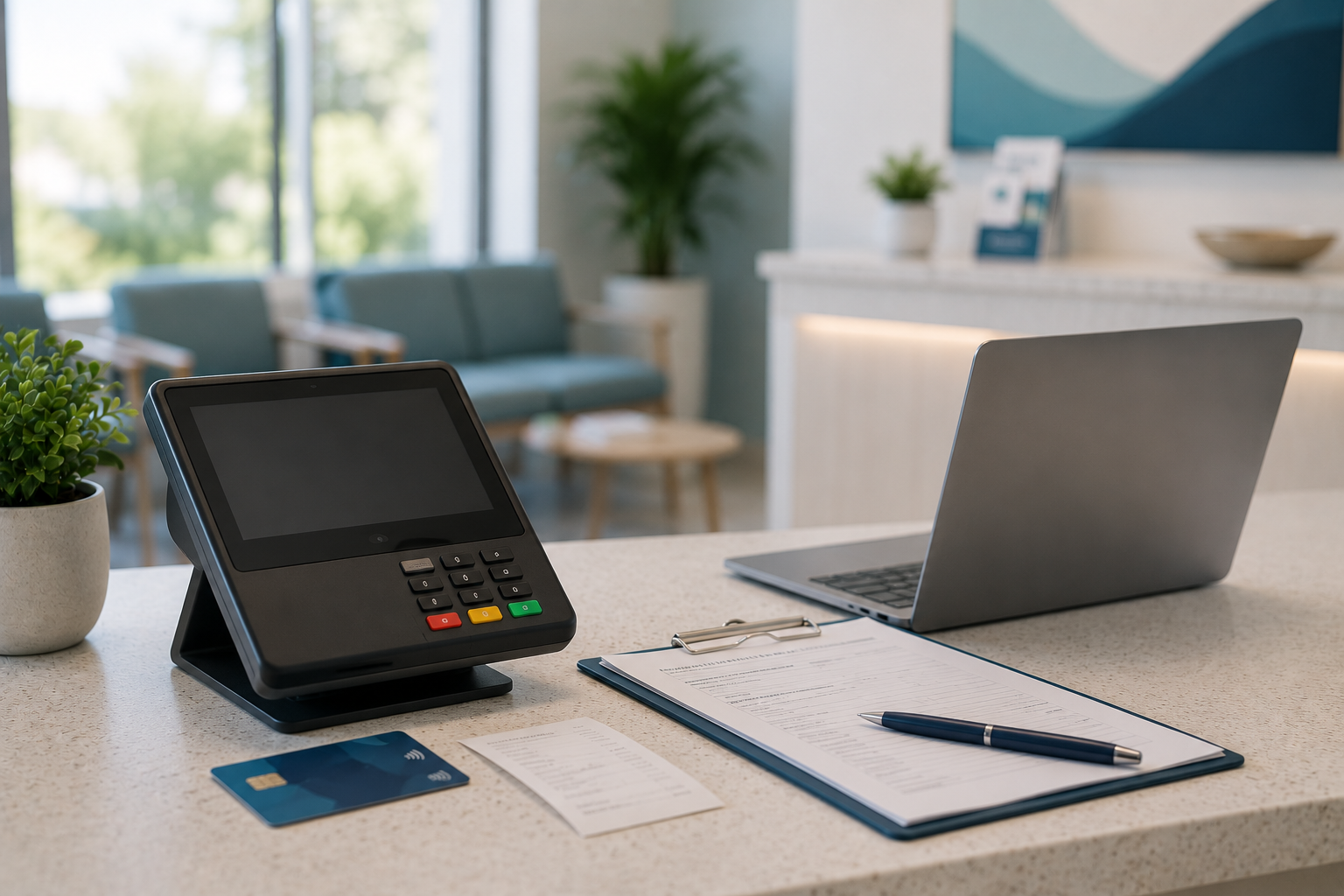
Patients forgive a long wait more readily than a confusing bill. A statement that shows up weeks later, for an amount nobody mentioned, payable only by check or by calling during office hours, can undo an otherwise good visit. Healthcare payment tools solve much of that, and the solution has less to do with technology than with removing surprise and effort.
This article is for practice managers and owners who watch balances age, see front-desk staff dodge money conversations, and occasionally find a one-star review that turns out to be about billing and not about care.
Billing Is Part of the Patient Experience
Patients judge a practice on the whole relationship, and the bill is usually the last thing they hear from you. If that final contact is unclear or inconvenient, it colors how they describe the practice to friends and whether they come back.
Patient responsibility has also become a larger part of what practices collect, as deductibles and coinsurance shift more of the cost to the individual. People who are used to paying for everything else from their phone in a few taps notice when a medical office still expects a stamp. Making payment easy is a retention tactic as much as a collections tactic.
The Healthcare Payment Tools Worth Having
Match each tool to the specific friction it removes. If you cannot name the friction, you do not need the tool yet.
| What patients say | Tool that addresses it | What to check before you switch it on |
|---|---|---|
| “I never saw the statement.” | Text and email pay links | Contact consent on file; no clinical detail in the message |
| “I can only call during my own work hours.” | Online bill pay, open around the clock | Works on a phone; easy to find from your home page |
| “I meant to pay and forgot.” | Card on file | Signed authorization and a clear written policy |
| “I can’t cover this all at once.” | Payment plans | Consistent eligibility rules and automatic scheduled payments |
| “Nobody told me it would cost this much.” | Pre-visit estimates | Benefits verified; estimate labeled as an estimate |
Text and email pay links
A short message saying a balance is ready, with a link to a secure payment page, reaches people where they already are. Keep the message generic: practice name, the fact that a statement is available, and the link. Leave out the service, the provider’s specialty and anything else that hints at why the patient was seen. Texting patients also requires appropriate consent, so fold billing messages into the same opt-in process that governs your SMS program for appointment and practice messages.
Card on file
With the patient’s written authorization, the practice keeps a payment method securely with its processor and charges the remaining balance once insurance has adjudicated. Patients accept this when the policy is specific: what will be charged, roughly when, up to what amount without a call first, and how they will be notified beforehand. Card details belong in the processor’s secure vault, never in a spreadsheet, a sticky note or the chart.
Online bill pay
Put a “Pay My Bill” link in the main navigation and the footer of your website. Let patients pay as a guest with a statement number, because forcing a portal login at the moment someone is ready to pay loses a share of them. If your current site buries the link or the page breaks on a phone, that is a quick fix for whoever handles your website updates and maintenance.
Payment plans
A plan offered early prevents an account from going silent. Write down who qualifies, the shortest and longest terms you will offer, who can approve exceptions, and what happens when a payment fails. Automate the scheduled charges so nobody on staff has to chase installments.
Talk About Cost Before the Visit
Payment technology cannot rescue a bill the patient did not expect. The most effective step is a cost conversation before care is delivered.
- Verify eligibility and benefits before the appointment, not at the window.
- For planned procedures, give a written estimate of the patient’s share and explain in one sentence why the final amount may differ.
- Publish plain-language pages on your website covering the plans you accept, your self-pay approach and whom to call with a cost question.
- State your financial policy at scheduling and again in the reminder, so it is never news at checkout.
Federal rules give uninsured and self-pay patients a right to a good-faith estimate in many situations, and states add their own billing and disclosure requirements. Card handling brings separate data-security standards. All of this is general information and not legal advice; ask your compliance counsel and your payment processor to confirm what applies to your practice.
Front-Desk Scripting That Makes the Ask Normal
Staff avoid asking for money when they fear the reaction. Give them wording that is matter-of-fact and kind, then practice it aloud at a team meeting until it stops feeling awkward.
- At scheduling: “We checked your benefits, and your plan shows a specialist copay for this visit. We collect that at check-in, and we take cards, HSA cards and mobile pay.”
- At check-in: “Your copay today is the amount we discussed. Would you like to use the card we have on file or a different one?”
- When there is a prior balance: “I also see a balance from your last visit. I can take care of that today, or I can text you a secure link to pay later this week. Which is easier?”
- When the patient hesitates: “I understand. We can split that into monthly payments. Let me show you the options.”
- When staff do not know the answer: “I don’t want to guess. Let me have our billing specialist call you today with the exact figure.”
Notice what these lines share: a specific reason, a choice between two acceptable options, and no apology for asking.
Heading Off Billing-Related Negative Reviews
Read your lowest-rated reviews and sort them by cause. The usual triggers are an unexpected amount, a statement nobody could decode, an unanswered billing line, and an account sent to collections with no warning.
Each trigger has a fix. Estimates address the first. A redesigned statement with plain labels, a date of service and one obvious way to pay addresses the second. A named billing contact with a direct number and a same-day callback standard addresses the third. For the fourth, send at least two clear notices through two different channels before any account leaves your office, and offer a plan in each.
When a billing complaint does appear publicly, reply without confirming that the writer is a patient or referring to any account detail. Invite them to call a named person in your billing office, and then actually resolve the issue.
Track a few measures each month: how long balances take to be paid after the statement goes out, what share of payments arrive through digital channels, how many billing calls come in, and how many complaints mention billing. Compare each number with your own history.
Where to Begin This Quarter
Pick the single largest friction from the table and solve that one first. For most practices that means a visible online payment page plus text-to-pay, followed by card on file and a written payment-plan policy. iLoyal Medical offers healthcare payment systems for medical practices, and you are welcome to book a free consultation to map your current billing touchpoints and decide what to change first.
Frequently Asked Questions
What payment options should a medical practice offer patients?
At a minimum: card and mobile payment at the front desk, an online bill-pay page that works on a phone without a portal login, and pay links sent by text or email. Card on file and a written payment-plan policy come next. Let the complaints you hear most decide what you add next, not a vendor’s feature list.
Is it okay to text patients a link to pay their bill?
Many practices do, provided the patient has agreed to receive texts and the message contains no clinical information. Keep it to the practice name, a note that a statement is ready and a secure link. Consent and privacy requirements vary, so treat this as general information and confirm your process with compliance counsel.
How does a card-on-file policy work in a medical office?
The patient signs an authorization allowing the practice to charge a stored payment method for balances remaining after insurance processes the claim. A good policy states what can be charged, any amount above which you will call first, and how the patient is notified. The card data should be stored by your payment processor, not by your staff.
How can we collect patient balances without upsetting patients?
Remove surprises and offer choices. Verify benefits beforehand, give estimates for planned procedures, state your financial policy at scheduling, and train staff to ask with a reason and two options, such as paying today or receiving a secure link. Offer payment plans early. Patients usually object to being surprised, not to being asked.
How do billing problems affect a practice’s online reviews?
A noticeable share of negative reviews for many practices concern unexpected amounts, unclear statements or unreturned billing calls, not clinical care. Clear estimates, readable statements, a named billing contact and warning before collections reduce those complaints. When one appears, respond without confirming the person is a patient and move the conversation to a private call.
Let’s Chat!
Tell us what you want to accomplish with your marketing and we’ll connect you with the apps and team that fit you like a glove – even if it’s not iLoyal! Stop spending time searching and let experts guide you toward a marketing tech solution and great service experience.
Call 1-877-347-3376